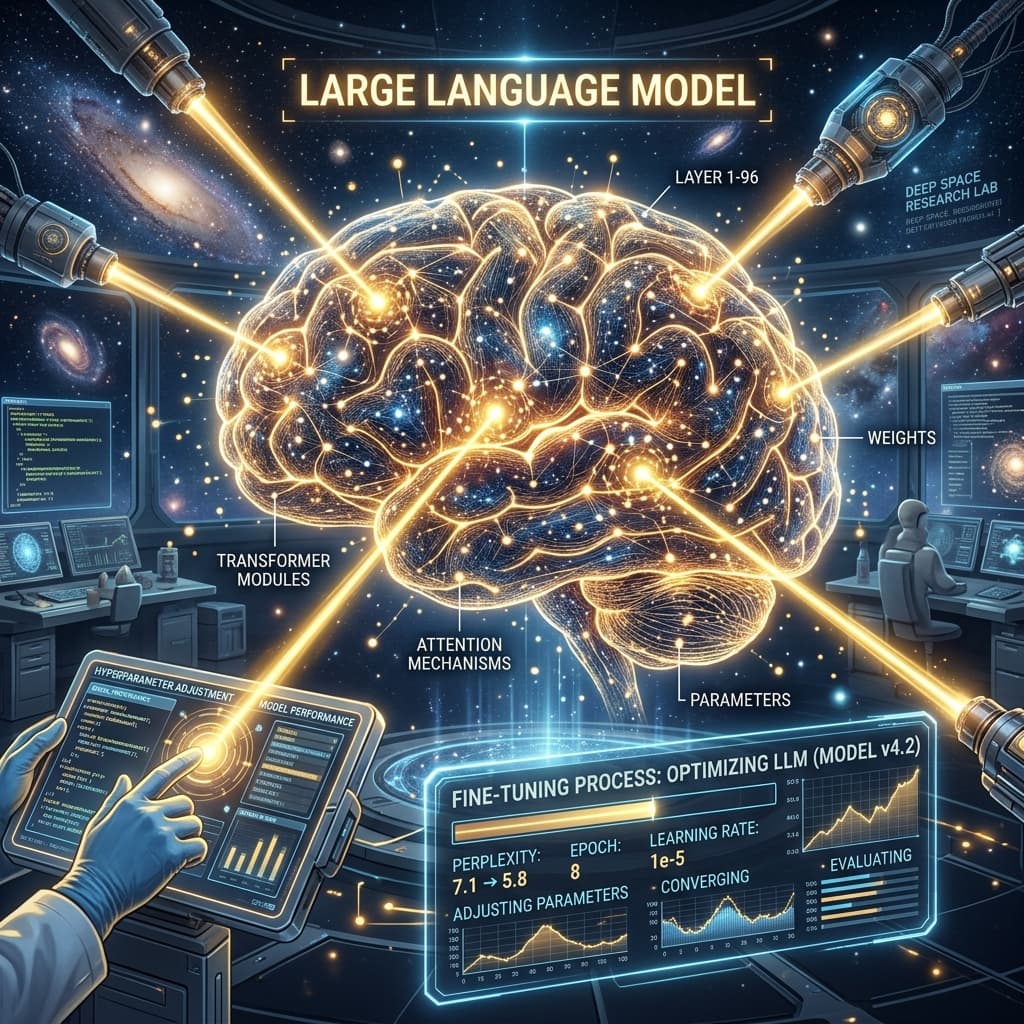
Fine-tuning LLMs vs. RAG: Choosing the Right AI Strategy for 2026
As enterprises race to integrate Generative AI into their core operations, the most common technical question we face at Agnos is: "Should we use Retrieval-Augmented Generation (RAG) or Fine-tune our own model?"
In 2026, the answer is no longer binary. The most successful AI strategies are Hybrid.
Understanding RAG: The Dynamic Library
Retrieval-Augmented Generation (RAG) is like giving an LLM a library card. Instead of relying only on its training data (which might be months or years old), the model "looks up" the most relevant documents from your company's private database before answering a query.
RAG is best for:
Understanding Fine-Tuning: The Specialist Apprentice
Fine-tuning is like sending the LLM to a specialized graduate school. You are actually modifying the model's weights so it "learns" a specific behavior, tone, or technical language.
Fine-Tuning is best for:
The Agnos Hybrid Approach
At Agnos, we recommend a "Behavior First, Knowledge Second" approach.
We often Fine-tune a smaller, more efficient model (like Llama-3-8B or Mistral) to understand the specific "business logic" and "brand voice" of our clients. This makes the model an expert at how to communicate. Then, we layer RAG on top of that specialized model to provide the "ground truth" facts. This ensures the model is an expert at what to communicate.
By distilling intelligence into smaller, fine-tuned models and pairing them with high-performance RAG pipelines, we help enterprises achieve state-of-the-art accuracy with significantly lower token costs and faster response times. In the world of enterprise AI, it's not about having the "biggest" model; it's about having the most specialized and efficient architecture for your unique operational needs.