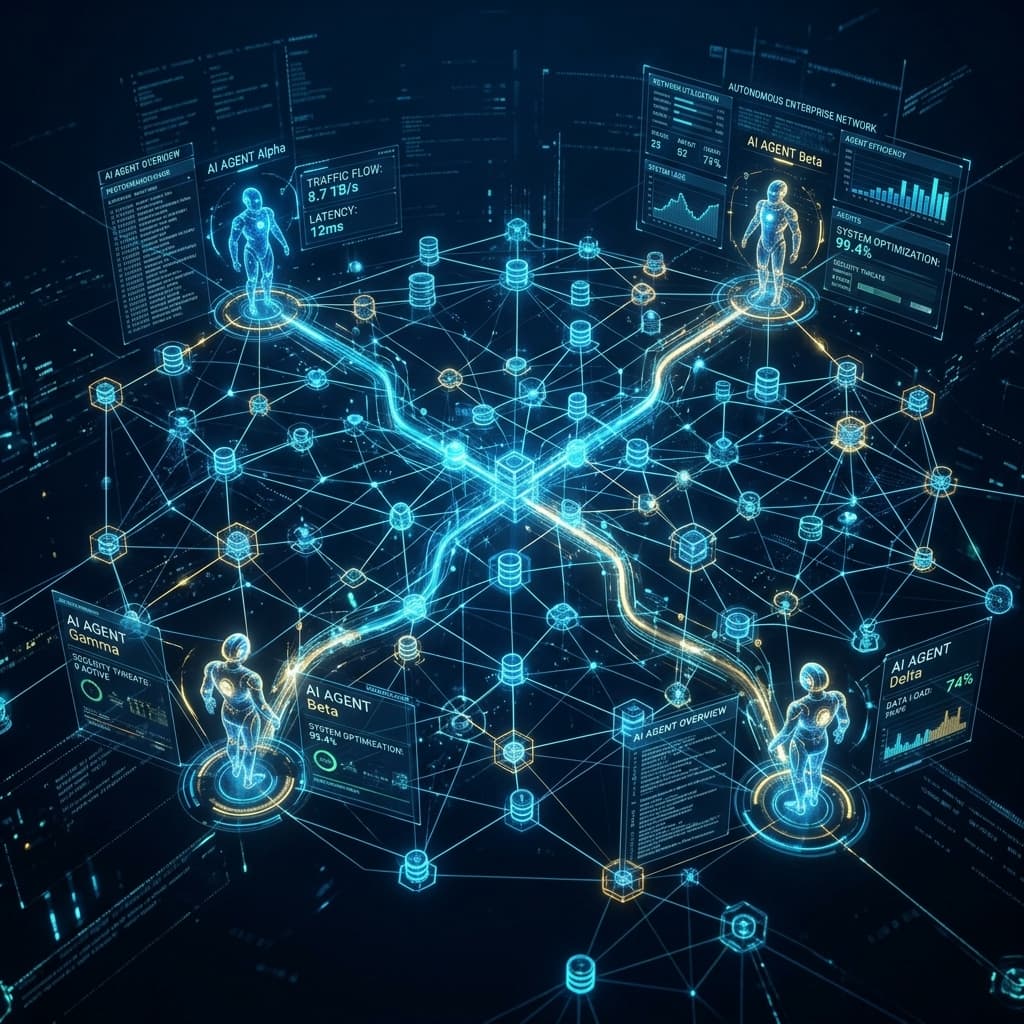
The Rise of Autonomous Enterprise Agents: Beyond Chatbots
In 2026, the definition of enterprise AI has undergone a radical transformation. We have moved past the era of simple conversational chatbots—the kind that merely retrieve information or answer FAQ-style questions. Today, the frontier is defined by Autonomous Enterprise Agents. These are systems capable of independently planning, executing, and optimizing complex, multi-step workflows with minimal human intervention.
From Assistant to Operator
The core shift is from AI that acts as an assistant to AI that acts as an operator. An assistant might summarize a meeting; an operator identifies the action items, checks team availability, schedules follow-up tasks in Jira, and sends preliminary data reports to the relevant stakeholders before the next meeting even begins.
These agents operate within defined "guardrails"—business logic and security parameters that ensure they act according to company policy. They don't just "chat"; they "do."
The Multi-Agent Ecosystem
One of the most significant trends we've observed at Agnos is the rise of Multi-Agent Systems. Instead of one giant, monolithic AI trying to do everything, enterprises are deploying "swarms" of specialized agents.
For example, in a modern logistics pipeline:
1. The Analyst Agent monitors global shipping delays and weather patterns.
2. The Optimizer Agent recalculates routes based on the Analyst's data to minimize fuel costs.
3. The Negotiator Agent automatically communicates with freight partners to secure new slots based on the updated routes.
These agents "talk" to each other via event-driven architectures, often built on high-performance backends like Kafka or Flink, ensuring that every decision is based on real-time data rather than stale reports.
Engineering the Future
Building these systems requires more than just a large language model. It requires a robust Agentic Architecture. This includes:
At Agnos, we focus on engineering the permanence of these systems. We ensure that your autonomous virtual workforce is as reliable, secure, and scalable as any human team, if not more so. The goal is not to replace humans, but to liberate your most expensive talent from the administrative deadlock of manual process management, allowing them to focus on high-level strategy and innovation.